A business can have a beautiful website, a strong logo, and an impressive social media presence. Then someone receives an email from a random Gmail address and suddenly the whole thing feels a little less professional.

It is a small detail, but small details shape how people perceive a business.

When a customer receives an email from he***@**********ss.com instead of yo**********@***il.com, they immediately get another signal that the business has an established digital identity. It does not guarantee trust, but it creates a more consistent experience from the first interaction.

Your website tells people who you are.

Your business email reinforces it.

The website gets the attention, the email continues the relationship

Most businesses think about their website as the centre of their online presence. That makes sense because it is usually where customers first learn about the company.

But the relationship rarely ends there.

A customer may contact you through a website form, request a quotation, receive an invoice, ask for support, or continue a conversation with your sales team. All of those interactions happen through communication channels outside the website.

That is where professional email becomes important.

The website creates the first impression. Email often becomes part of the relationship that follows.

What a professional email address actually changes

Using a custom domain does not magically make a business more trustworthy. A poorly run business with a professional email address is still a poorly run business.

But when the rest of the experience is professional, a branded email address completes the picture.

For example:

he***@*****ny.com
sa***@*****ny.com
su*****@*****ny.com

These addresses immediately tell customers what they are communicating about and who they are communicating with.

A simple email structure can make a growing business feel much more organised.

It also makes your team look like a team

As a business grows, communication becomes more complicated.

Different people handle sales, support, accounts, partnerships, and general enquiries. Having individual addresses under the same domain creates consistency across the organisation.

A basic structure could look like:

• he***@*****ny.com for general enquiries

• sa***@*****ny.com for new customers

• su*****@*****ny.com for existing customers

• ac******@*****ny.com for billing and payments

• na**@*****ny.com for individual team members

Suddenly, communication feels like part of an actual business system rather than a collection of personal inboxes.

Your domain should follow your brand everywhere

Imagine seeing a company’s website at company.com, receiving a quotation from co*****@***il.com, and then being asked to make a payment through another unrelated address.

Nothing is necessarily wrong with that setup.

But it creates inconsistency.

A strong digital presence works best when the different pieces reinforce each other. Your website, domain, email addresses, social profiles, invoices, and other customer-facing channels should feel like they belong to the same organisation.

That consistency is easy to overlook because it isn’t a flashy feature.

Customers still notice it.

Professional email is especially important for growing businesses

For a freelancer working alone, a personal email address may be enough in the beginning.

But once you’re presenting yourself as an agency, startup, consultancy, ecommerce company, or established business, the expectations change.

Customers want to know that there is a real organisation behind the interaction.

A branded email address is one of the simplest ways to establish that consistency while keeping communication under your own domain.

And unlike a website redesign, it doesn’t require changing your entire digital presence.

The domain belongs to your business, not the email provider

One of the biggest advantages of using a custom domain is control.

Your email address is connected to your business domain rather than being permanently tied to a particular consumer email provider.

That means your business identity can remain consistent even if the underlying email or hosting service changes later.

This is particularly useful as businesses grow and their technology stack becomes more sophisticated.

The domain remains the identity.

The services behind it can evolve.

What you need to get started

Setting up professional business email is much simpler than many people assume.

The basic requirements are:

• A registered domain name

• An email hosting service

• Correct DNS configuration

• Appropriate security and authentication settings

• Mailboxes created for the people or departments that need them

Once configured properly, the process becomes almost invisible to the customer.

And that’s exactly how good infrastructure should feel.

Where UseCodify comes in

At UseCodify, we work with businesses on more than just the website itself.

We understand that getting a business online involves several connected pieces, from the domain and hosting to SSL, email, deployment, maintenance, and ongoing support.

That’s also why we introduced UsePixiHost.

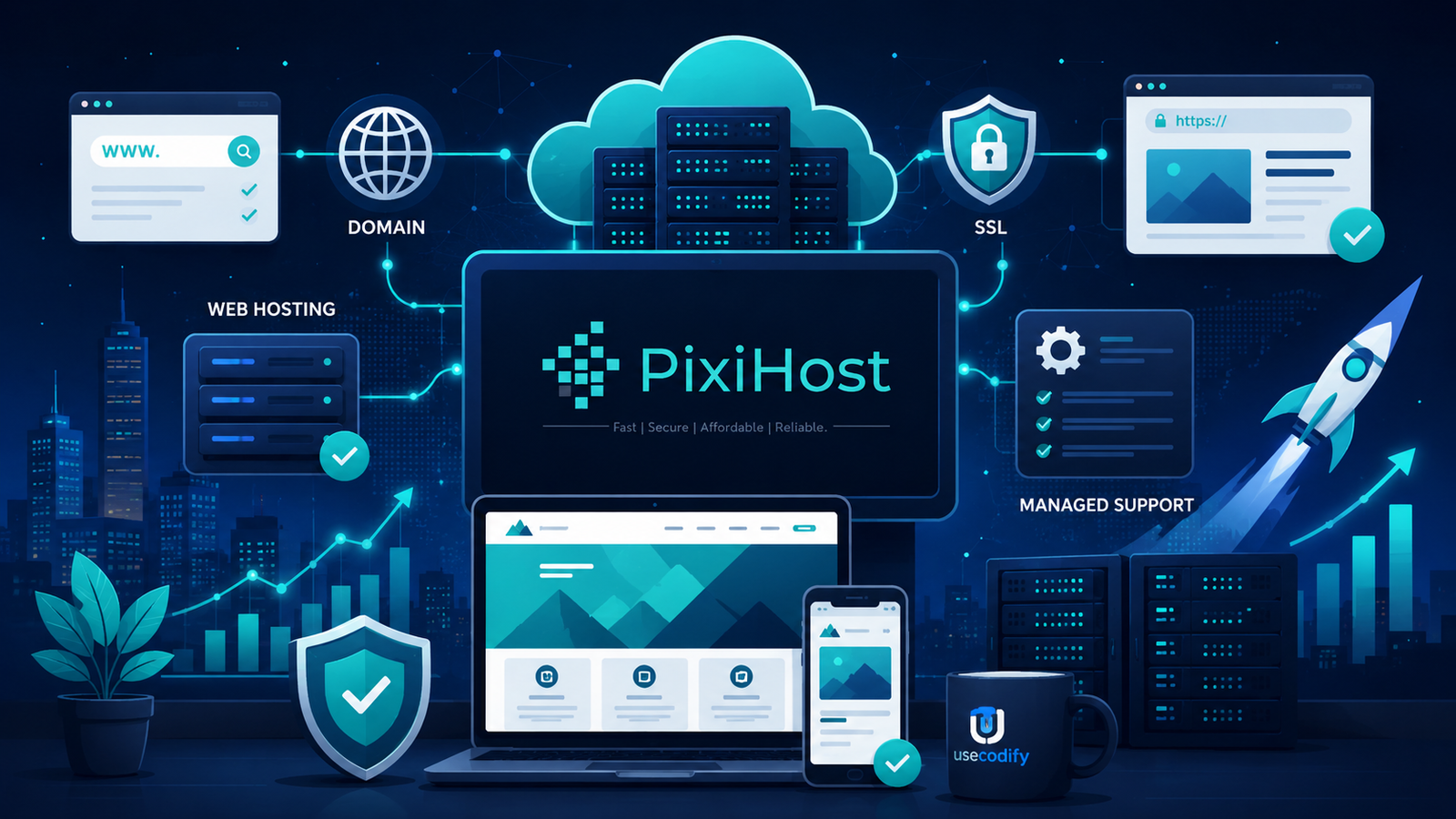
Through our hosting service, we can help businesses manage the infrastructure around their websites, including domains, hosting, SSL, and the other essentials needed to maintain a professional online presence.

Because building the website is only one part of getting a business properly online.

Your digital identity should feel connected

A customer should not have to think about which platform is responsible for what.

They should simply experience a business that looks consistent wherever they interact with it.

Your website should match your brand.

Your domain should match your business.

Your email should match your domain.

And the systems behind everything should work together reliably.

That is when a digital presence starts feeling like a real business infrastructure rather than a collection of separate tools.

Check Out this video : Why Your Business Needs a Professional Email Address

This video helps business owners understand the difference between using a personal email address and having a professional email connected to their own domain. It fits naturally with the article because it explains the practical and branding benefits without getting overly technical.

Final thought

Professional email might seem like a small part of running a business, but it appears in more customer interactions than most people realise.

Every quotation, enquiry, support response, partnership conversation, and follow-up becomes another opportunity to reinforce your brand.

A custom email address won’t build your reputation on its own.

But when combined with a professional website, reliable hosting, clear communication, and consistent branding, it becomes another small piece of a much stronger digital presence.

Your business has its own name.

Your email should carry it too.

Leave Your Comment:

Your email address will not be published. Required fields are marked *