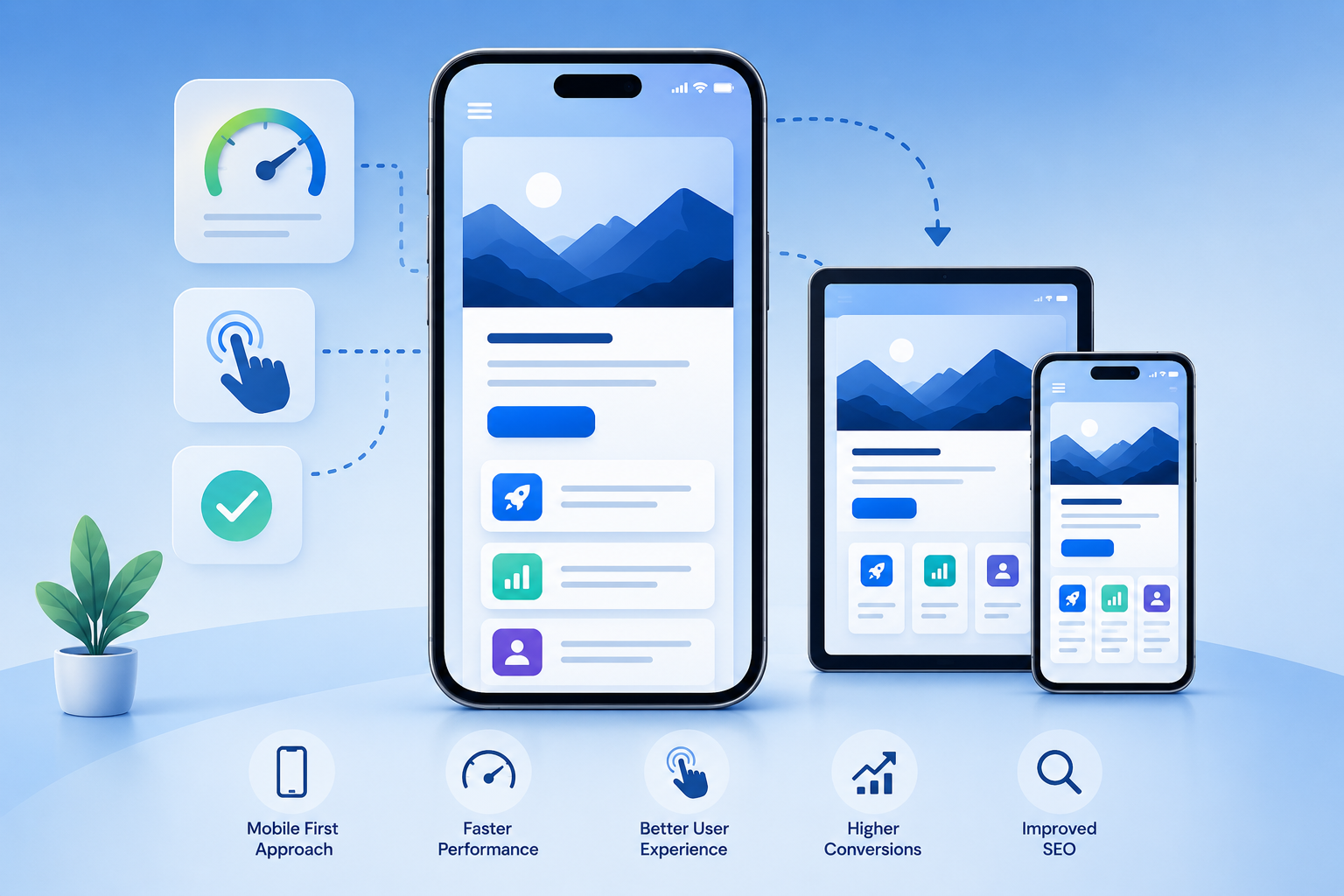
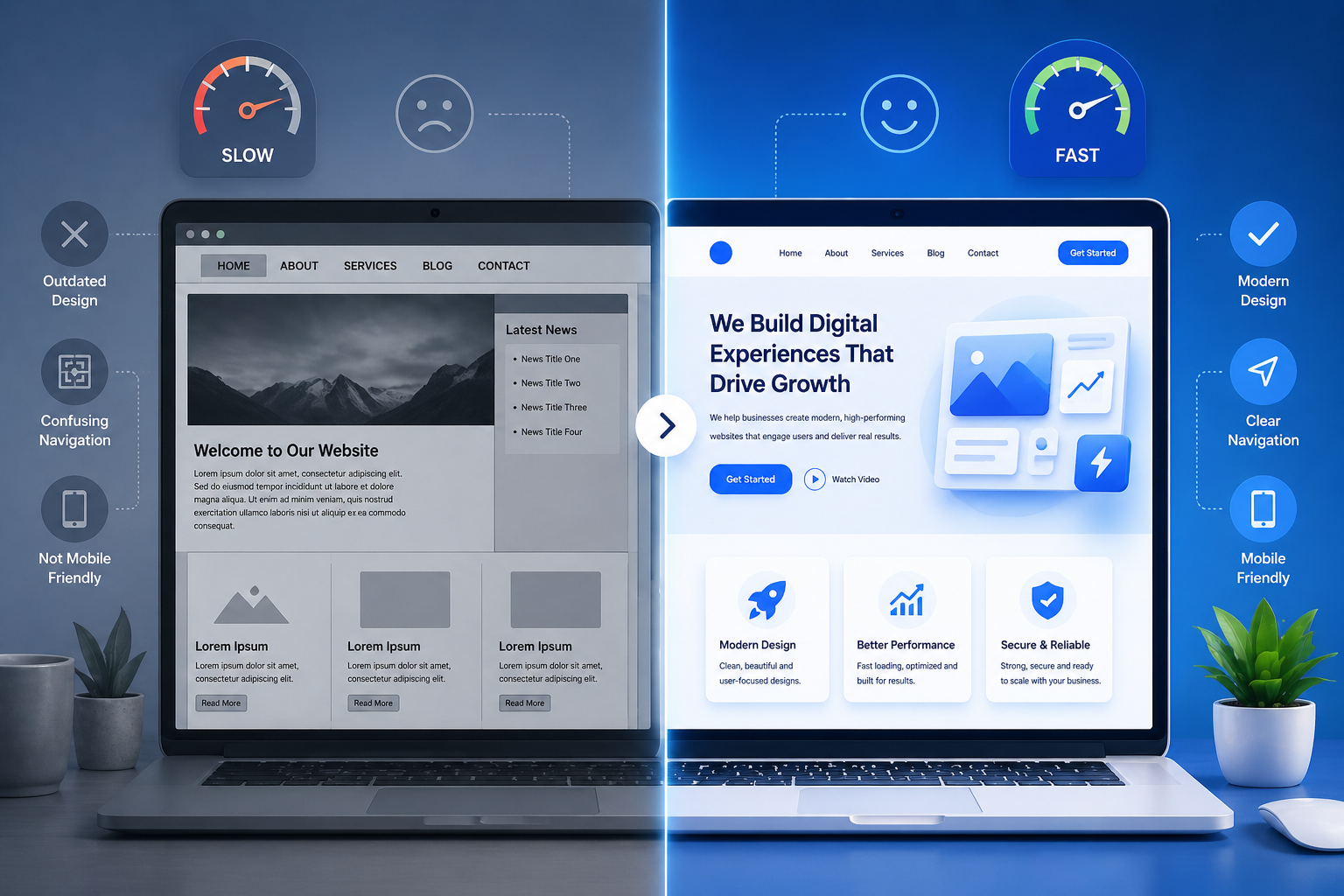
A website might look perfect on a large monitor in an office.

But that’s not where most people experience it anymore.

Today, the majority of users visit websites through mobile devices. They browse while commuting, scrolling quickly, switching between apps, and making decisions in seconds. If a website is not designed with that behavior in mind, it immediately creates friction.

This is why mobile-first design is no longer optional. It has quietly become the standard.

The way people use websites has changed

Desktop browsing used to dominate the internet. That’s no longer true.

Users now expect websites to work naturally on smaller screens without needing extra effort. They don’t want to zoom, struggle with menus, or wait for heavy pages to load.

A mobile experience affects how users feel about a business almost instantly.

Common frustrations include:

• text that feels too small to read
• buttons placed too close together
• menus that become confusing on phones
• slow loading on mobile data
• layouts that break on smaller screens

Most users never mention these problems. They simply leave.

Mobile-first design is about prioritization

Designing for mobile forces clarity.

There is less screen space, less patience, and fewer opportunities to capture attention. That pressure is actually useful because it forces businesses to focus on what truly matters.

Instead of filling pages with unnecessary sections, mobile-first design prioritizes:

  • clear messaging
  • smooth navigation
  • fast interaction
  • obvious next steps

The result is usually a cleaner and more effective experience overall.

Why mobile performance affects trust

People associate smooth digital experiences with professionalism.

If a website feels slow or awkward on mobile, users unconsciously question the business itself. Even strong products or services lose credibility when the experience feels outdated.

On the other hand, a fast and responsive mobile experience creates confidence immediately.

Users may not consciously think:
“this mobile optimization is impressive.”

But they absolutely feel when something works well.

Search engines now prioritize mobile experience

Mobile usability is no longer separate from SEO. It directly affects visibility.

Search engines evaluate:
• mobile responsiveness
• loading speed
• layout stability
• usability across devices

A poor mobile experience can quietly reduce rankings over time, even if desktop performance is strong.

This means mobile optimization is not just a design decision. It’s also a visibility decision.

Small mobile issues create bigger business problems

The dangerous part about mobile issues is how subtle they seem individually.

A slightly slow page.
A button that’s difficult to tap.
A layout that shifts unexpectedly.

Each issue feels minor on its own. Together, they create friction that affects conversions, engagement, and trust.

That’s why businesses often underestimate how much mobile experience impacts overall performance.

What strong mobile-first websites usually do well

The best mobile experiences tend to feel simple, fast, and intuitive.

They focus on:

• lightweight and optimized layouts
• clear spacing and readable typography
• touch-friendly navigation
• fast loading assets and images
• content structure designed for scrolling behavior

Good mobile design removes effort instead of adding features.

The mistake many businesses still make

A lot of websites are still designed desktop-first and then “adjusted” for mobile later.

That approach usually creates compromises.

Elements become compressed, navigation becomes awkward, and performance suffers because the experience was never originally built for smaller screens.

Mobile-first thinking changes the process completely. It starts with the user environment most people actually use today.

Check Out this video : Why Mobile-First Design Matters Today

This video explains how user behavior has shifted toward mobile devices and why businesses need to prioritize mobile experience when building websites.

Final thought

Most users are not sitting behind large monitors when they visit your website.

They are on phones, moving quickly, making decisions fast, and expecting everything to work instantly.

A website that feels smooth on mobile builds trust immediately. A website that struggles on mobile quietly pushes people away.

Mobile-first design is no longer a trend.

It’s simply how modern websites are expected to work.

Leave Your Comment:

Your email address will not be published. Required fields are marked *