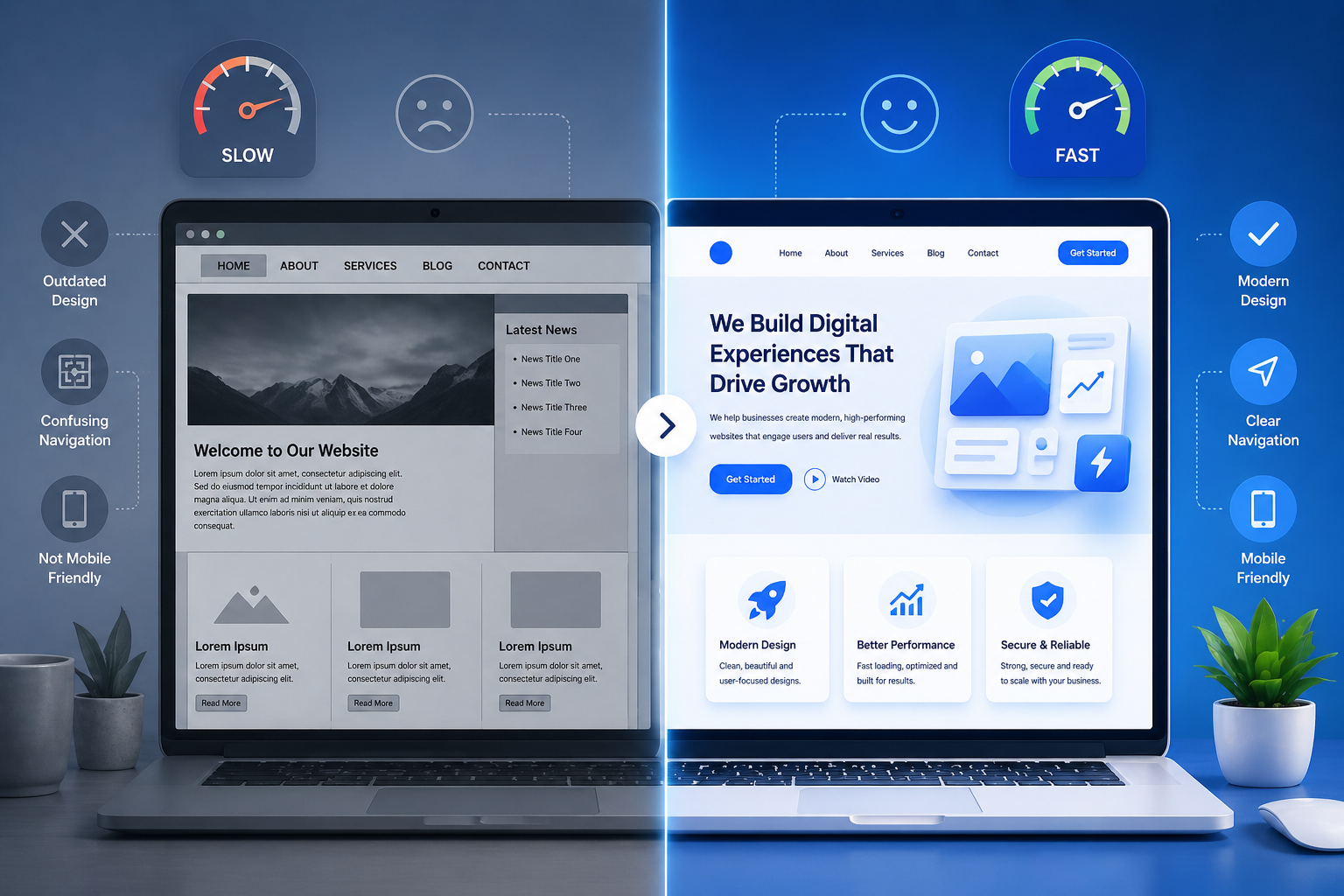
Most websites don’t fail loudly. They fade quietly.

There’s no crash, no error, nothing that forces immediate action. Pages still load, links still work, and from the outside everything seems okay. That’s exactly why businesses delay redesigns. If nothing is obviously broken, it feels unnecessary to fix anything.

But the reality is different. A website doesn’t need to break to start losing value. It just needs to fall slightly behind what users expect today.

The difference between working and performing

A website can function perfectly and still underperform.

Users don’t judge your website in isolation. They compare it to every smooth, fast, well-designed experience they’ve had elsewhere. That comparison happens instantly, often within seconds of landing on your page.

When a site feels even slightly outdated, users notice it without thinking about it.

Common signals include:

• subtle delays when navigating between pages
• layouts that feel rigid on mobile devices
• unclear structure that forces users to search
• too much content competing for attention

Individually, these seem small. Together, they create friction.

Why most businesses miss the problem

The biggest issue with outdated websites is not that they stop working. It’s that they slowly stop performing.

There’s no single moment where things go wrong. Instead, results gradually weaken. Fewer people take action. Engagement drops slightly. Conversions become inconsistent.

Because the change is slow, it rarely feels urgent. But over time, that small decline turns into a noticeable gap between effort and results.

What modern users expect without saying it

User expectations have shifted quietly over the past few years.

People don’t consciously think about speed, structure, or design systems. But they react to them immediately. A good experience feels effortless. A poor one feels frustrating, even if users can’t explain why.

A modern website typically delivers:

• instant loading or near-instant response
• clear messaging within the first few seconds
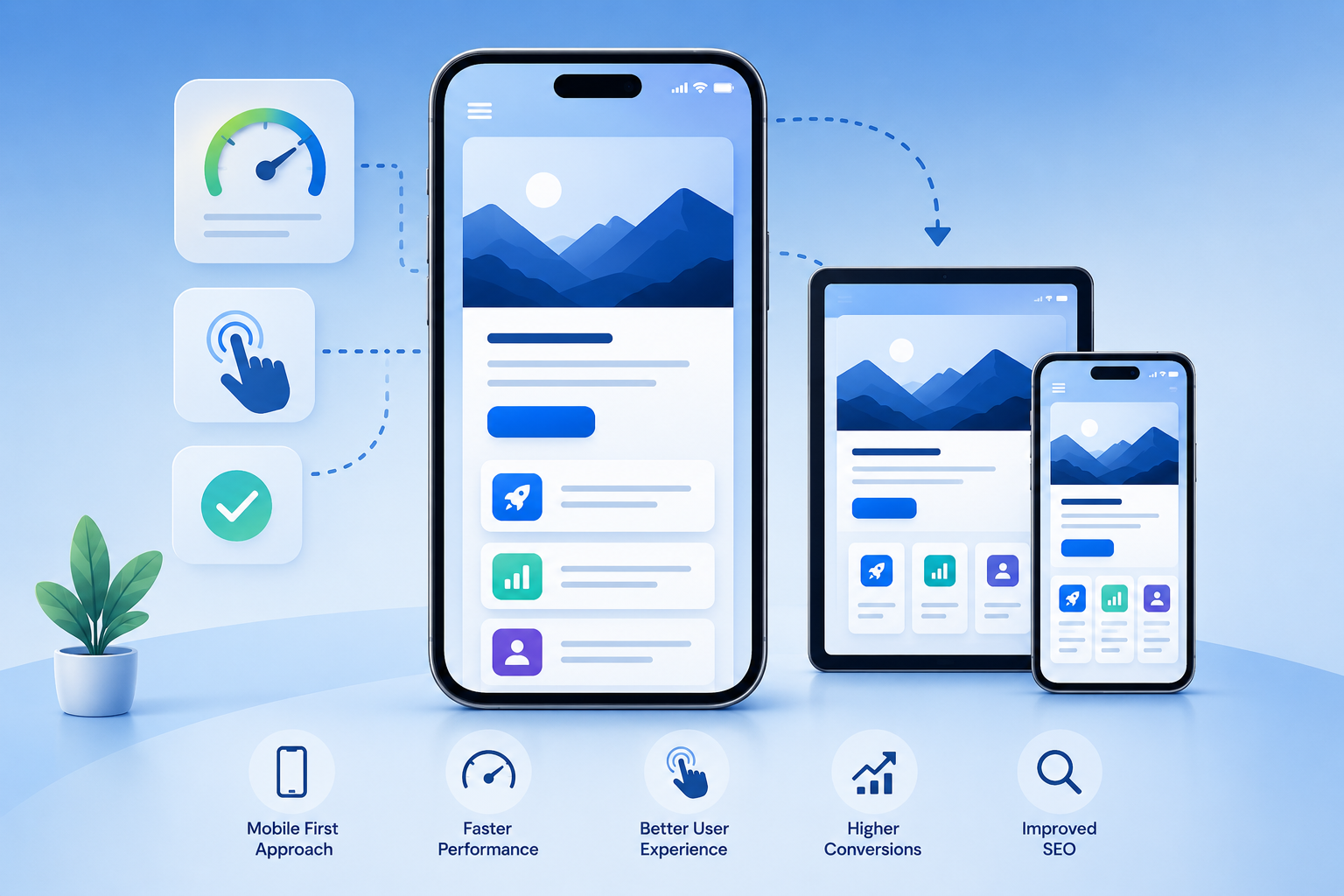
• smooth interaction across all screen sizes
• obvious next steps without confusion

When these elements are present, users move forward naturally. When they’re missing, users hesitate.

Redesign is less about design and more about clarity

There’s a common misconception that redesign is mainly visual.

In reality, it’s structural.

A strong redesign removes friction. It simplifies decisions. It aligns content, layout, and flow so users don’t have to think about what to do next. The visual upgrade is just the surface layer of a deeper improvement.

Instead of adding more, the focus is usually on removing what doesn’t help.

Signs your website is already holding you back

Sometimes the easiest way to evaluate a website is through simple signals rather than detailed analysis.

You may not notice everything directly, but patterns start to appear:

• your website feels slower than others you visit
• users don’t take action even when traffic is steady
• the design no longer reflects your current business
• mobile experience feels like an afterthought
• you hesitate before sharing your site with confidence

If multiple signs show up together, the issue is already affecting performance.

What actually improves after a redesign

When a redesign is done with the right intent, the impact is immediate.

Not because everything looks new, but because everything works better.

You typically see:

  • clearer user flow from landing to action
  • improved engagement without forcing interaction
  • better conversion from the same traffic
  • stronger perception of trust and professionalism

Users don’t analyze these changes. They simply respond to them.

Check Out this video : When Should You Redesign Your Website

This video explains how to recognize when a website is underperforming and why redesign becomes necessary over time.

Final thought

A website can be technically fine and still be a problem.

If users are not moving forward easily, something is already off. That friction might be small, but its impact grows over time.

Redesign is not about keeping up with trends. It’s about staying aligned with how people interact, decide, and trust.

The real question is not whether your website works.

It’s whether it works well enough for where your business is going next.

Leave Your Comment:

Your email address will not be published. Required fields are marked *